
Empires in Decline
Exclusion, Prophecy, Tyranny, and Fragmentation

I. Introduction
The fall of empires is seldom explained by battlefield defeat or the slow attrition of resources alone. More often, collapse accelerates when crises provoke corrosive social and political reactions from within. Across civilizations, four dynamics recur with striking regularity. First, hostility toward outsiders expressed in purges, pogroms, or expulsions turns minorities into scapegoats for decline. Second, millenarian or apocalyptic visions reframe crisis as the positive threshold of cosmic renewal, displacing pragmatic reform with utopian longing. Third, rulers respond to insecurity with tyranny, concentrating power in ways that erode trust and alienate subjects. Finally, internal divisions between elites and commoners, provinces and centres, or competing nationalities shatter the cohesion that once sustained dominance.
What makes these traits most revealing is that they surface not in marginal states but in empires at their zenith, where magnificence conceals profound vulnerability. The Achaemenid Persians, Romans, Han, Byzantines, Abbasids, Tang, Spanish, Ottomans, Russians, and Germans each embodied supremacy in their era. Yet each unraveled through the same destructive responses. Their trajectories suggest a sobering truth: the greatest threats to enduring power rarely arrive from outside. Instead, they emerge from within—fear, mistrust, and extremism, transforming strength into vulnerability, and vulnerability into collapse.
What is most telling about these patterns is that they are not signs of weakness at the margins of history. They emerge most clearly at moments of supreme confidence, when empires believe themselves to be permanent. The political psychology of dominance is paradoxical: the more power a civilization accumulates, the more intolerable the prospect of loss becomes. Decline is experienced as humiliation, betrayal, or cosmic injustice. It is this emotional misrecognition of decline that triggers the most destructive responses.
II. The Achaemenid Persians
At its height in the fifth century BCE, the Achaemenid Persian Empire stretched from the Indus Valley to the Aegean, commanding the largest and most diverse dominion the world had yet seen. Monumental capitals such as Persepolis and Susa displayed immense wealth and grandeur, projecting an image of cosmic order and unshakable authority. Royal inscriptions, invoking divine sanction, emphasized the king’s role as chosen by Ahura Mazda, a stabilizing force whose legitimacy bound together disparate peoples and languages.
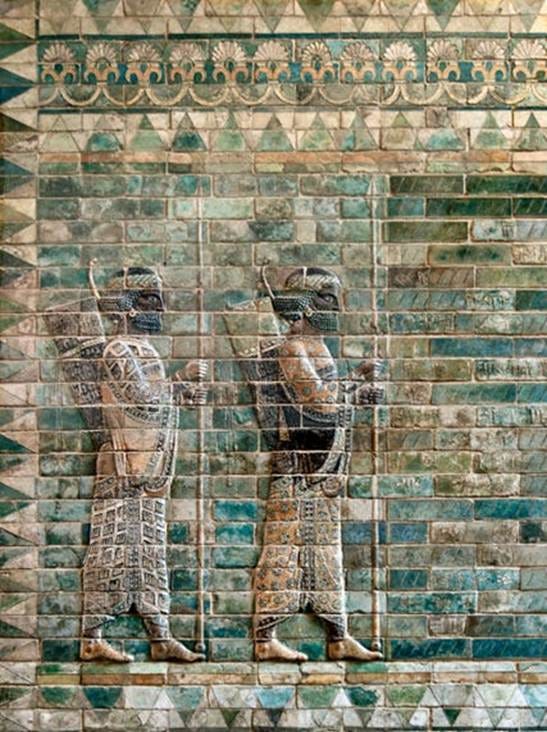
Figure 1. The Frieze of Archers (c. 408, Darius’ Palace in Susa)
Yet beneath this carefully constructed display, vulnerabilities deepened. Provincial satraps often exercised near-independent authority, extracting resources while cultivating regional loyalties. This autonomy made imperial cohesion precarious, as the empire’s scale demanded delegation but encouraged fragmentation. Military defeats at the hands of the Greeks at Marathon, Salamis, and later at Plataea undermined the aura of Persian invincibility, revealing that imperial might was not limitless. In the wake of such losses, anxieties about internal disloyalty intensified. Greek communities and mercenaries within Persian territory increasingly became objects of suspicion, their presence exemplifying the empire’s exclusionary reflex: the tendency to view outsiders not as contributors to strength but as potential saboteurs of stability.
At the same time, Zoroastrian eschatology provided a cosmic framework through which new imperial crises could be interpreted. Setbacks were recast as part of the eternal struggle between truth (asha) and falsehood (druj), promising eventual renewal, but simultaneously amplifying paranoia in the present (Briant 2002, 653–55). Later kings, seeking to confront insecurity, narrowed their circles of trust. They resorted to purges, intrigue, and repression. The tyranny destabilized succession and alienated powerful elites and distant provinces, eroding the very loyalty on which cohesion depended.
By the time Alexander launched his campaign in the fourth century BCE, the Achaemenid Empire still appeared monumental from the outside, but it was brittle within. Its downfall was not only the achievement of a brilliant conqueror, but the culmination of decades of fragmentation, suspicion, and fear. The state that had proclaimed permanence collapsed once the internal bonds of trust had frayed.
III. Rome
The Roman Empire represented the pinnacle of classical power. By the second century CE, its legions encircled the Mediterranean, its cities boasted aqueducts, amphitheaters, and monumental forums, and the Pax Romana projected an aura of unending stability. To citizens and outsiders alike, Rome’s order appeared to be the final word in governance and civilization.
Beneath this spectacle of durability, however, instability grew. Minorities became convenient scapegoats: Jews and Christians were expelled, harassed, or persecuted, most notoriously under the Emperor Nero following the Great Fire of 64 CE, when blame was shifted onto a marginalized group to mask imperial incompetence (Goodman 2008, 52–54). Such scapegoating reflected a deeper anxiety—the understanding that Rome’s cohesion was fragile, and required common enemies to be held together. And on the empire’s outer margins, millenarian sects thrived, particularly in the province of Judaea, where visions of divine deliverance gained urgency under Roman repression.
Tyranny compounded this fragility. Emperors such as Caligula and Commodus transformed the principate from a system of shared governance into a theatre of despotism, wielding fear as their principal instrument of rule (Heather 2006, 210–14). Such figures weakened confidence in individual rulers, leading to periodic crisis events. They also eroded the credibility of imperial institutions, encouraging the perception that power rested only on coercion. The civil wars of the third century drove this lesson home, as rival legions elevated contenders in rapid succession, revealing how shallow the structures of legitimacy had become.
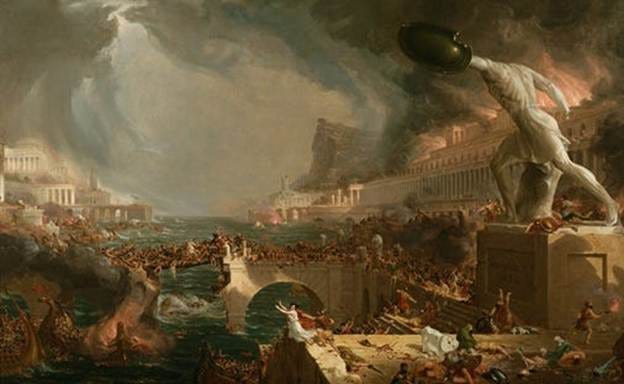
Figure 2. Thomas Cole, Destruction (1833-1836)
The later East–West division, formalized under Diocletian and Constantine, embodied the fracture, institutionalizing centrifugal pressures that had long threatened unity. When “barbarian” invasions delivered the final blows, they struck an empire already weakened by decades of scapegoating, tyranny, and internal division. Rome did not fall solely to external enemies; it collapsed because its foundations of trust and cohesion had already crumbled.
IV. The Han Dynasty
The Han Dynasty (206 BCE–220 CE) forged an empire equal to Rome in scale, prestige, and ambition. With tens of millions of subjects and a bureaucratic system grounded in Confucian ideals, the Han projected an image of permanence, of an empire whose order reflected cosmic harmony and administrative rationality. Chinese armies pressed deep into Central Asia, asserting dominance along the Silk Roads and embedding China in the wider Afro-Eurasian world. Confucian institutions, reinforced by examinations and the canonization of classical texts, set enduring political norms that would shape dynasties for centuries. To contemporaries, Han supremacy seemed unshakable.
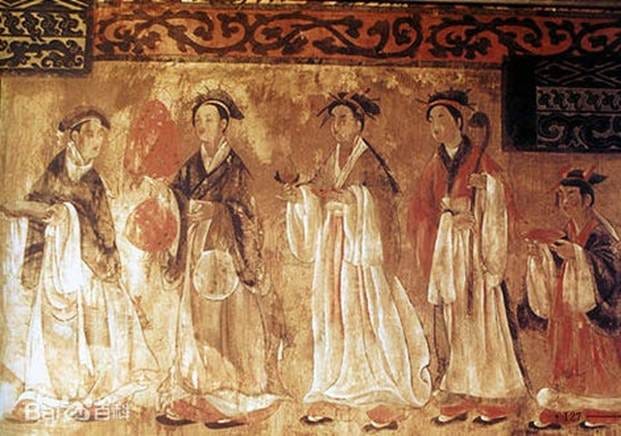
Figure 3. Dahuting mural, Eastern Han Dynasty (3rd century)
But the façade of permanence concealed mounting strains. Protracted frontier wars against the Xiongnu drained state resources, bled manpower, and sharpened hostility toward “barbarian” outsiders. This reinforced the sense that security was precarious, even at the empire’s height. And within the court, corruption flourished. Factions exploited imperial vulnerability, reducing emperors to pawns in internecine struggles, while alienating the Confucian scholar-officials who were supposed to embody moral governance. Tyranny became less a display of confidence than a symptom of insecurity, with purges and intrigue undermining stability at the centre of imperial power.
The crisis reached its most explosive form in 184 CE with the Yellow Turban Rebellion. Inspired by Daoist prophecy, this millenarian movement promised cosmic renewal and the healing of social ills in an age of despair. Hundreds of thousands, perhaps millions, were drawn into revolt, their mobilization fuelled by material grievances and apocalyptic hope (Loewe 1986, 98–101). Though the rebellion was brutally suppressed, it revealed how deeply disillusionment had penetrated society.
The aftermath proved decisive. Regional warlords, initially empowered to contain rebellion, consolidated their autonomy, carving out fiefdoms that no longer heeded central authority. The dynasty that seemed like the embodiment of unified Chinese civilization fragmented into rival states, plunging the realm into the Three Kingdoms era. What appeared eternal collapsed, and not primarily because of foreign threats, but under the cumulative weight of millenarian upheaval, tyrannical misrule, and accelerating internal fragmentation.
V. Byzantium
The Byzantine Empire preserved Roman statecraft for nearly a thousand years, astounding contemporaries with its wealth, diplomacy, and religious prestige. Constantinople, the empire’s capital, was the wealthiest city in the Mediterranean, a commercial centre linking Europe and Asia. Its Hagia Sophia stood as both a marvel of the Christian world and a symbol of imperial legitimacy, while the city’s triple walls gave an impression of impregnability. Byzantium presented itself as the heir of Rome, a fusion of Christian universalism and imperial grandeur that seemed destined to endure.
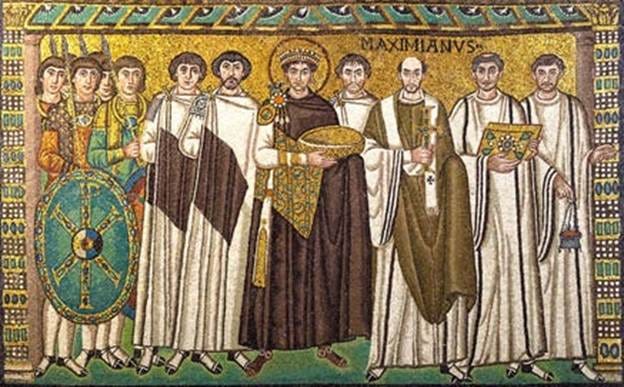
Figure 4. Mosaic of Emperor Justinian I (c. 527, Basilica of San Vitale in Ravenna)
Yet its decline revealed the familiar pattern of internal erosion. In 1182, anti-metic violence erupted in the massacre of Latin merchants, a xenophobic lashing out that weakened Byzantium’s trade lifelines and poisoned relations with the very Western allies it increasingly needed. At the same time, millenarian prophecies circulated widely, alternately predicting miraculous deliverance or divine judgement, offering cosmic explanations for political setbacks but also deepening the people’s sense of fatalism.
At court, tyranny became a political routine: emperors were made and unmade through bloody palace coups; rivals were blinded, mutilated, or imprisoned as a matter of course. Heavy taxation, demanded to fund wars and court extravagance, alienated the rural populace whose support had once sustained the empire. Most corrosive of all was the fracture of faith and identity: the Great Schism between Orthodoxy and Catholicism severed ecclesiastical unity and entrenched mutual suspicion. The atmosphere crippled diplomacy with the Latin West, after which elites in Constantinople, isolated from provincial realities, extracted wealth from peasants while neglecting the defense of the empire’s shrinking frontiers (Treadgold 1997, 452–54).
When the Ottomans finally besieged Constantinople in 1453, they confronted a city of splendid monuments, but a state already broken by division, mistrust, and exhaustion. Byzantium did not simply fall; it unravelled from within, its splendid display long concealing the fragility beneath.
VI. The Abbasid Caliphate
In the eighth and ninth centuries, the Abbasid Caliphate represented the most pluralistic power of its age. Baghdad, its capital, was not only a political heart but a cultural and intellectual nerve centre, home to the House of Wisdom and a trans-regional web of trade that linked Spain to Central Asia. To contemporaries, the Abbasids seemed destined to endure forever as guardians of Islamic civilization, heirs to prophetic authority on an imperial scale.
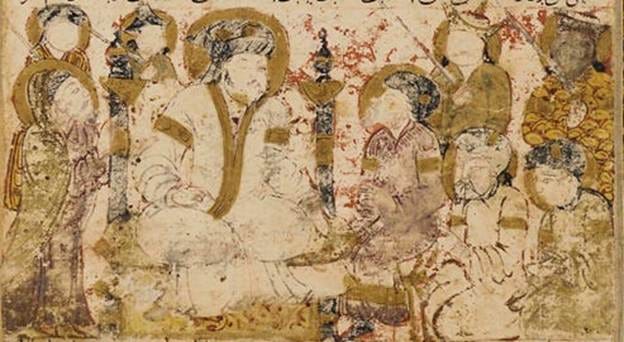
Figure 5. Tarikhnama of Bal’ami (14th century)
But even during this golden age, the roots of decline were evident. Arab and Persian elites, once the backbone of the dynasty, resented the growing influence of Turkish slave soldiers whose military prowess made them indispensable but whose outsider status stoked deep suspicion. This dynamic epitomized the empire’s tendency toward exclusion: widespread resentment of foreigners who, while central to sustaining power, were cast as threats to political stability.
Meanwhile, millenarian Shiʿa sects gained momentum, envisioning the arrival of the Mahdi who would renew Islam and overturn corrupt rule. The radical Qarmatian movement carried this impulse to its extreme, sacking Mecca in 930, thereby shattering confidence in the caliphate’s sacred authority (Hodgson 1974, 213–16). Their defiance revealed how far legitimacy had eroded, with apocalyptic hope now overshadowing allegiance to Abbasid order.
As legitimacy waned, caliphs themselves were reduced to figureheads. Real power was seized by military strongmen who ruled through purges, repression, and arbitrary violence. Tyranny, far from strengthening authority, deepened disillusionment and fractured traditional loyalties. And ethnic and regional rivalries compounded the time of crisis: Arabs against Persians, Persians against Turks, provinces against the centre. What had once been the cultural and intellectual heart of the Islamic world devolved into a patchwork of competing polities, unable to forestall political collapse.
VII. The Tang Dynasty
The Tang Dynasty (618–907) presided over what is often regarded as the golden age of Chinese civilization, when poetry, painting, and statecraft reached heights that defined cultural memory for centuries. Chang’an, the imperial capital, was the largest city in the world, a great metropolis where Persians, Arabs, Koreans, and Japanese mingled in its trading markets. Tang armies extended Chinese influence deep into Central Asia, securing dominance on the Silk Roads, while the dynasty’s renown radiated across East Asia as a model of governance and culture. To contemporaries, Tang supremacy appeared transcendent.
Yet the arc of decline followed with devastating clarity. The An Lushan Rebellion of 755–763 tore through the empire, killing millions, and permanently weakening the dynasty’s economic and military foundations. Although the Tang survived the uprising, it never regained its former strength. Suspicion of outsiders surged in the aftermath, as prosperity gave way to paranoia. The world-embracing openness that had once been the Tang’s hallmark radically narrowed, culminating in the Guangzhou massacre of 879, when thousands of foreign merchants were slaughtered in an eruption of xenophobic violence (Twitchett 1979, 463–65).
Millenarian Buddhist and Daoist sects gained followers during this period, promising renewal through cosmic revolution. Their appeal reflected widespread disillusionment with the Confucian institutions that had once anchored imperial legitimacy. At court, eunuchs consolidated power, manipulating succession and wielding tyranny through purges that hollowed out imperial authority. And far outside the palace walls, regional warlords entrenched themselves as semi-independent rulers, draining revenue and reducing the emperor to a symbolic figurehead.
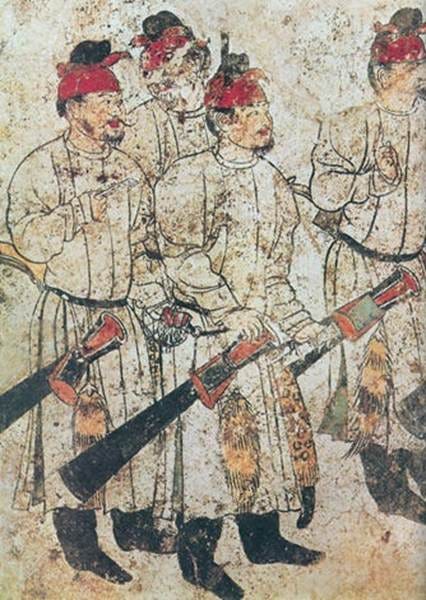
Figure 6. Mural from the tomb of Li Xian at the Qianling Mausoleum (8th century)
By 907, the Tang disintegrated, its radiant culture unable to compensate for political fracture. The dynasty’s fall revealed a paradox: a civilization of incredible cultural vitality undone by rebellion, xenophobia, tyranny, and fragmentation.
VIII. The Spanish Empire
The Spanish Empire of the sixteenth and seventeenth centuries was the first truly global superpower. Fuelled by the immense influx of silver from the Americas, it projected power from Manila to Mexico and stood at the centre of a transoceanic empire. The Armada symbolized not only naval might but also Catholic zeal, reinforcing the perception among contemporaries that Spain’s dominion was destined to endure indefinitely. To many Europeans, Spain seemed the empire that would define the future.
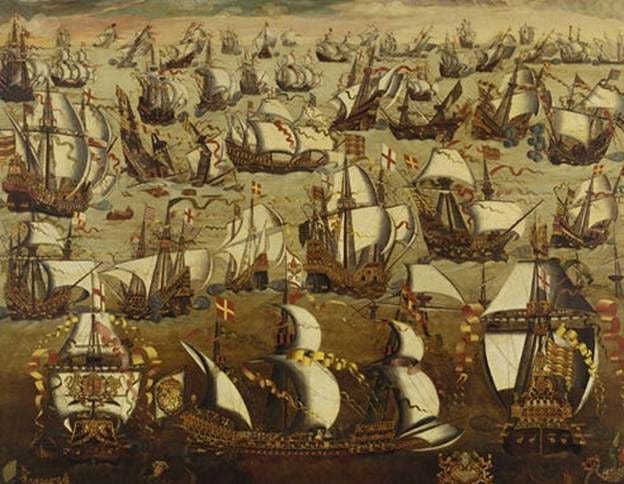
Figure 7. English Ships and the Spanish Armada (1588, unknown artist)
Yet decline set in with astonishing speed. The expulsion of the Moriscos between 1609 and 1614 was a textbook example of exclusionary policy: hundreds of thousands of productive subjects were uprooted and expelled in the name of religious purity (Kamen 2003, 179–82). The purge weakened the economy, but its deeper effect was symbolic, revealing an obsession with homogeneity that corroded the very unity an empire of such diversity required. In choosing exclusion over integration, Spain narrowed the base of its own strength.
At the same time, Catholic millenarian visions interpreted every crisis, every plague, military defeat, or economic downturn, as divine punishment. Apocalyptic readings encouraged widespread fatalism rather than reform, leaving the empire psychologically trapped between guilt and expectation of miraculous redemption. Tyranny added to the burden, for the Inquisition enforced conformity with fear, suppressing intellectual vitality and discouraging innovation in a period when adaptive thinking was most needed.
Meanwhile, internal divisions multiplied. Catalan uprisings and the costly revolt of the Netherlands drained resources and fractured authority, forcing Spain to expend energy on suppressing its own subjects rather than confronting external rivals. Thus, while England and France gained ground on the international stage, Spain hollowed itself out from within. Its decline was not the work of rivals alone but the product of purges, religious tyranny, and a failure to achieve unity across its vast dominion.
IX. The Ottoman Empire
For centuries, the Ottoman Empire dominated southeastern Europe, the Middle East, and North Africa. Its armies besieged Vienna, its fleets ruled the eastern Mediterranean, and Istanbul flourished as a metropolis of trade and culture. To contemporaries, Ottoman power seemed inexhaustible—a polity knit together by administrative sophistication, religious legitimacy, and military might.
The decline of the Ottomans followed the familiar trajectory of internal corrosion. In the later centuries, anti-metic violence scarred the empire’s fabric, from the Hamidian massacres of Armenians in the 1890s to the Armenian genocide of 1915–1916. These eruptions of exclusion and brutality reflected not confidence but fear, revealing a state that turned violently on its minorities. At the same time, millenarian figures rose on the empire’s periphery: the Sudanese Mahdi, for example, proclaimed holy war against Ottoman weakness, reframing decline as evidence of divine corruption.
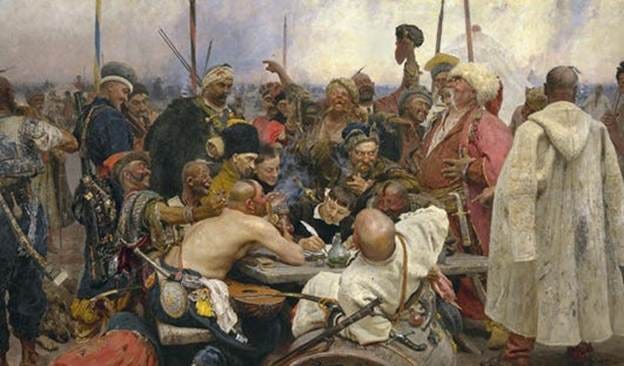
Figure 8. Ilya Repin, Reply of the Zaporozhian Cossacks (1880-1891)
Tyranny deepened under Sultan Abdul Hamid II, who relied on censorship, repression, and an extensive secret police network to maintain his grip on power (Hodgson 1974, 237–39). Such methods secured short-term survival. But they dramatically eroded legitimacy, alienating reformers and traditional elites. Above all, nationalism proved the most fatal fracture. Greeks, Serbs, Bulgarians, and Armenians sought independence, and this transformed former subjects into potential insurgents allied with external enemies. What had once been the empire’s greatest strength—its capacity to contain and encompass a mosaic of peoples and cultures—became the catalyst of its disintegration.
By the early twentieth century, the “sick man of Europe” staggered toward collapse, dismantled from within long before the First World War delivered its final blow. The empire’s grandeur and longevity could not shield it from the corrosive effects of exclusion, tyranny, and the nationalist shattering of its unity.
X. The Russian Empire
By the nineteenth century, Russia had become a vast Eurasian colossus, rivalling Britain and France in territorial expanse and military might. Its czars commanded immense armies, while its sprawling bureaucracy sought to govern an empire that stretched across eleven time zones. To contemporaries, Russian autocracy appeared immovable and permanent.
Yet beneath the façade, corrosive dynamics that had undone earlier empires were active. Pogroms targeted Jews in waves of recurring violence, while Poles, Germans, and other minorities were regarded with suspicion. The process reinforced divisions and eroded the possibility of inclusive unity (Hosking 1997, 401–03). Exclusionary violence did not strengthen the empire; it exposed deep distrust between the state and its subjects.
Millenarianism, both religious and secular, further destabilized the order. Sects such as the Old Believers clung to visions of divine renewal and spiritual purity. Revolutionary movements, by contrast, transformed the sense of longing into secular prophecy. The Bolsheviks in particular envisioned a world-historical transformation that would sweep away czarist tyranny in favour of a new social and political order. Both strands of millenarian thought—religious and revolutionary—testified to a loss of confidence in the empire and to the desire for transcendent renewal.
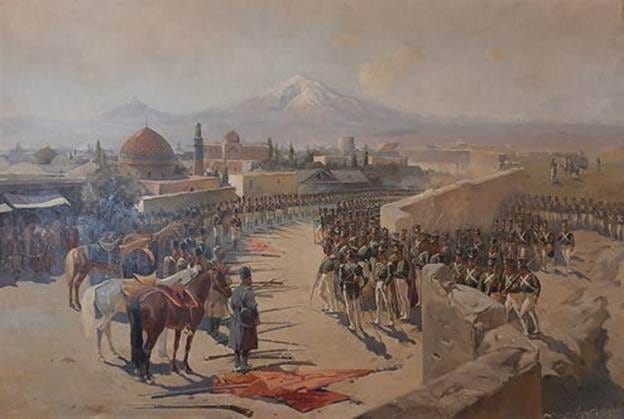
Figure 9. Franz Roubaud, Siege of Erivan Fortress in 1827 (1893)
Tyranny, the czars’ instinctive response to insecurity, accelerated the crisis. Reliance on censorship, violence, and the dreaded secret police alienated already tense sectors of Russian society. So instead of increasing stability, repression effectively stifled reform and drove opposition factions into radical channels. At the same time, structural divisions continued to sharpen. Peasants pressed grievances against landlords, revolutionaries prepared to fight against conservatives, and national minorities continued to press for autonomy against the Russian core of power. The empire no longer held together as a shared project, but as a contested battlefield of factional interests.
By 1917, this brittle structure collapsed with astonishing speed. The First World War acted as a catalyst, but the empire’s downfall had been prepared by decades of repression, fragmentation, and revolutionary fervour. What had seemed a permanent autocracy dissolved almost overnight, revealing how fear, mistrust, and extremism had split up Russia long before the Romanovs fell.
XI. Germany and the Third Reich
In the early twentieth century, Germany stood among the most advanced industrial and military powers in the world. Its universities, science, and culture rivalled Britain and France, while its army was widely regarded as Europe’s most formidable. Even after defeat in World War I, Germany remained a major power. But the Weimar Republic exposed deep fragilities. Economic crisis, political violence, and social polarization left the republic brittle.
Into this fractured landscape, older anti-metic currents hardened into genocidal antisemitism. Under the Nazis, prejudice began as a social pathology but soon became the central principle of state policy. Hitler fused nationalism with millenarian promise, envisioning a “Thousand-Year Reich” that would redeem Germany’s humiliation through apocalyptic renewal (Kershaw 1999, 108–11). Hitler’s narrative gave despair a transcendent meaning: Germany’s decline was not to be managed but obliterated in a redemptive new order.
The tyranny of the Third Reich reached its zenith in the machinery of totalitarianism. The Gestapo and SS imposed unity through violent state surveillance and terror, crushing dissent and manufacturing obedience. Still, the repression did not resolve Germany’s underlying divisions. The bitter antagonisms of the Weimar years—Communists against nationalists, liberals against reactionaries—were never healed. They were temporarily silenced under a regime that mistook coercion for cohesion.
The Nazi state temporarily masked internal fracture with military conquest, but its extremism guaranteed destruction. Genocide, war, and utopian ambition consumed the resources and legitimacy on which endurance depended. Within twelve years, a regime that had promised eternal dominion collapsed in flames, undone by the forces it had unleashed. Germany’s trajectory was not an aberration but an accelerated version of the imperial cycle: scapegoating, millenarian hope, tyranny, and division converging to produce catastrophe.
XII. Imperial Decline: Common Features and Underlying Causes
The historical survey reveals a striking convergence: empires as different as Persia, Rome, Han China, Byzantium, the Abbasids, Spain, the Ottomans, Russia, and Germany all succumbed to pressures that followed a recurring pattern. Four features stand out—hostility toward internal outsiders or metics, millenarian hope, tyrannical centralization, and internal fragmentation. The deeper question, however, is why these dynamics recur persistently across civilizations and centuries.
At the heart of anti-metic movements lies fear: the recognition that supremacy, once assumed to be permanent, is slipping away. As confidence falters, societies search for visible culprits who can be punished to restore a sense of control. Ethnic minorities, religious dissenters, and resident foreigners become obvious scapegoats. Psychologically, this process offers the illusion that decline stems from treachery rather than structural weakness. Politically, it can generate temporary unity among the “loyal” population, forging solidarity through collective blame and hostility. Yet this unity is extremely fragile, achieved only by narrowing the definition of who belongs. In the long run, exclusion corrodes the social fabric of empire, making adaptation harder and weakening the diversity that once underpinned power.
Millenarian movements arise from the human impulse to impose narrative meaning on suffering. When established institutions fail, and the present appears intolerable, apocalyptic or utopian visions offer a highly attractive narrative of redemption. Whether religious, as in the Yellow Turbans of Han China and Shiʿa Mahdism under the Abbasids, or secular, as in Bolshevik utopianism and Nazism’s prophecies, these movements reframe despair as destiny. Collapse is no longer an ending; it is the threshold to purification and rebirth. The psychological appeal is deep and profound, yet the consequences in the world of politics are destabilizing. By rejecting reform and compromise, millenarian visions radicalize societies already in crisis. Their rise signals the exhaustion of confidence in established authority.
Authoritarian centralization often emerges less from strength than from panic. Faced with mounting instability, rulers tighten their grip, convinced that only coercion can prevent chaos. Purges, censorship, and repression become reflexive tools for elites who fear dissent more than they trust loyalty. This kind of imperial tyranny reflects a deeper psychological dynamic: a refusal to share power, coupled with the projection of collective hopes onto a single figure who promises salvation. The effect is exceptionally corrosive. Harsh repression severs bonds of trust between rulers and ruled, silences the initiative and creativity needed for renewal, and ultimately accelerates the process of decline.
Of all the recurring traits, internal fragmentation is the most fatal. As crises deepen, faith in institutions erodes. Elites hoard resources, provinces and regions assert autonomy, and ordinary citizens retreat into narrower loyalties of class, religion, or ethnicity. The central project of empire—the belief that diverse peoples can share in a common order—crumbles. And when trust in that collective identity collapses, no bureaucracy or army can bring the polity together again. Rebellion, secession, or outright indifference to imperial survival become rational strategies of self-preservation for those outside the centre. Fragmentation marks the moment when insiders stop believing in the story that once bound them.
Taken together, these patterns suggest that imperial decline is not necessarily the work of foreign enemies. Rather, it grows from the social and psychological costs of dominance itself. The greater the empire, the sharper the fear of loss. And the sharper the fear, the stronger the temptation to scapegoat outsiders, concentrate power, and retreat into factional loyalties. Decline is rarely treated as a manageable adjustment, but as an existential threat, provoking extreme responses of exclusion, utopian dreaming, tyranny, and fracture. In this light, the end of empires is not simply a failure of material strength but a failure of trust: trust in institutions, in leaders, and in the shared identity that makes collective life possible.
What these cases ultimately reveal is that imperial systems are poor at managing relative decline. They are structured to expand, dominate, and command, but not to contract with dignity. When contraction begins, elites interpret it as betrayal, populations interpret it as moral decay, and leaders interpret it as justification for coercion. The tragedy of empire is not that it ends, but that it so often destroys the social trust that might otherwise survive its passing.
XIII. Conclusion
From Persia to Germany, the twilight of empires followed a tragic script. These states stood confidently at the apex of their eras—large, wealthy, advanced societies—yet their greatness offered no immunity against decay from within. Fear corroded confidence: minorities were scapegoated, apocalyptic visions promised redemption through social upheaval, and tyrannical rulers clutched at control while alienating their subjects. Internal divisions hollowed out the unity that had sustained power. External enemies may indeed have delivered the final blows, but they struck empires already weakened by their own self-destructive responses to crisis.
History makes clear that empires rarely fade in quiet decline. They unravel in convulsions, their dramatic collapses exposing how fragile the supposed veneer of invincibility had always been. Their grandeur, however dazzling, masked deeper vulnerabilities. The greatest danger to the empire lies not beyond its borders but in the fear, mistrust, and extremism that corrode the foundations of collective life.
Works Cited
Briant, Pierre. From Cyrus to Alexander: A History of the Persian Empire. Eisenbrauns, 2002.
Goodman, Martin. Rome and Jerusalem: The Clash of Ancient Civilizations. Penguin, 2008.
Heather, Peter. The Fall of the Roman Empire: A New History of Rome and the Barbarians. Oxford University Press, 2006.
Hodgson, Marshall G. S. The Venture of Islam, Vol. 1: The Classical Age of Islam. University of Chicago Press, 1974.
Loewe, Michael. The Cambridge History of China, Vol. 1: The Ch’in and Han Empires. Cambridge University Press, 1986.
Treadgold, Warren. A History of the Byzantine State and Society. Stanford University Press, 1997.
Twitchett, Denis. The Cambridge History of China, Vol. 3: Sui and T’ang China, 589–906. Cambridge University Press, 1979.
Kamen, Henry. Empire: How Spain Became a World Power, 1492–1763. HarperCollins, 2003.
Hosking, Geoffrey. Russia: People and Empire, 1552–1917. Harvard University Press, 1997.
Kershaw, Ian. Hitler: 1889–1936, Hubris. W. W. Norton, 1999.
Image Credits
Figure 1. Frieze of Archers, glazed brick relief from the Palace of Darius I, c. 510 BCE. Susa (modern Shush), Iran. Musée du Louvre, Paris.
Figure 2. Thomas Cole, Destruction (from The Course of Empire series), oil on canvas, 1836. New-York Historical Society, New York.
Figure 3. Dahuting Tomb Mural, Eastern Han Dynasty, 3rd century CE. Dahuting Tomb, Henan Province, China.
Figure 4. Mosaic of Emperor Justinian I with Attendants, c. 547 CE. Basilica of San Vitale, Ravenna, Italy.
Figure 5. Tarikhnama of Balʿami (illustrated manuscript), 14th century. Persian historiographical tradition. National Library of France (BnF), Paris (representative manuscript).
Figure 6. Tomb Mural of Li Xian, Tang Dynasty, 8th century CE. Qianling Mausoleum, Shaanxi Province, China.
Figure 7. English Ships and the Spanish Armada, unknown artist, c. late 16th century. Maritime historical painting tradition. National Maritime Museum, Greenwich (representative version).
Figure 8. Ilya Repin, Reply of the Zaporozhian Cossacks, oil on canvas, 1880–1891. State Russian Museum, St. Petersburg.
Figure 9. Franz Roubaud, Siege of Erivan Fortress in 1827, oil on canvas, 1893. State Russian Museum, St. Petersburg.