
The Colonizer’s Mask
The Psychology of Moral Deformation

I. Introduction — The Mask of Power
In the essay Shooting an Elephant (1936), George Orwell offers one of the twentieth century’s most penetrating portraits of the colonizer’s divided self. Drawing on his experience as a British police officer in Burma, he recounts the moment he kills an elephant that had trampled a man—not out of necessity, but to preserve the appearance of imperial authority before a jeering crowd. The act becomes an execution of both animal and conscience. Orwell admits that he fires the fatal shots only to avoid humiliation, “to avoid looking a fool” (Orwell 1936, 6). His story is not about courage but about moral imprisonment. “He wears a mask,” Orwell writes, “and his face grows to fit it” (Orwell 1936, 7). The mask is not a metaphorical ornament but a psychological mechanism: the means by which power sustains itself through performance.
Every empire depends on this ritual of distortion. To appear strong, the colonizer must suppress compassion; to maintain authority, he must perform cruelty. Over time, the performance becomes identity; the act consumes the actor. In Orwell’s parable, the mask of power fuses with the face beneath, until the human being can no longer distinguish between what is real and what is role. His essay raises a question that reverberates across political history and literature alike: what happens to those who dominate?
The comfortable myth of domination is that it represents mastery, but the historical record suggests dependency. The tyrant, the planter, the interrogator, the colonial officer—each must continually reenact cruelty not to rule others, but to preserve his own coherence. Authority becomes captivity, and obedience masquerades as command. Domination corrodes the self that wields it; the morality of the master dissolves under the pressure of his own role. This is the psychological cost of power exercised without empathy; a process of moral deformation through which human beings destroy the faculties that make them human.
This essay traces that deformation through a series of literary and historical witnesses: Orwell’s colonial Burma, Conrad’s Congo, Fanon’s and Nandy’s analyses of the colonial psyche, Solzhenitsyn’s testimony from the gulag, and the American slave narratives that expose the intimate corruption of mastery. These diverse sources form a single moral archive: a record of what domination does to the self that enacts it. The argument unfolds through three interrelated phases—performance, dependency, and disintegration—which together describe the trajectory by which domination becomes self-destruction.
II. The Structure of Domination
Domination, at its root, is a psychological relation before it is a political one. It begins with performance—the visible enactment of control—and ends with disintegration, the inward collapse of conscience. Between these lies dependency, the stage at which the role of dominator becomes necessary to sustain identity. These three movements—performance, dependency, disintegration—are not successive historical periods but recurring moral states. They represent the stages through which the human psyche internalizes power.
Performance is the first stage, in which the individual learns to act out authority. Every hierarchical system requires a visible performance of superiority: the soldier shouting commands, the administrator reciting orders, the colonizer wielding the rifle. These actions are symbolic gestures that translate abstract power into spectacle. The actor may know the role is artificial, but repetition slowly makes it habitual.
Dependency emerges when the actor can no longer exist without the role. The performance ceases to be a mask and becomes a need. The dominator’s sense of purpose now depends on subordinates who reflect his importance back to him. Power becomes not merely a social privilege but a psychological addiction, one that must be reenacted daily to sustain the self.
Disintegration follows as the final stage, when the mechanisms of domination replace inner moral judgement. The individual no longer experiences conflict between conscience and command; obedience has become second nature. Bureaucracy, ideology, and ritual supply justification, while empathy and imagination wither. The self, once divided between mask and face, dissolves into function.
This structural model of domination—the transformation of performance into dependency, and of dependency into disintegration—serves as the lens through which the following cases can be understood. Across centuries and continents, the same progression repeats. The actors change, but the moral script remains the same.
III. Performance — The Colonial Self
Orwell’s Shooting an Elephant captures the opening movement of moral deformation: the performance of power. The colonial officer stands between two audiences—the empire that demands authority and the colonized crowd that demands spectacle. He cannot act freely; every decision must preserve his image as master. To hesitate would be to expose the fraudulence of the role. In this sense, his violence is theatrical rather than functional. He fires not to maintain order, but to uphold the mask that order requires. The rifle is both a weapon and a prop, an emblem of imperial prowess.
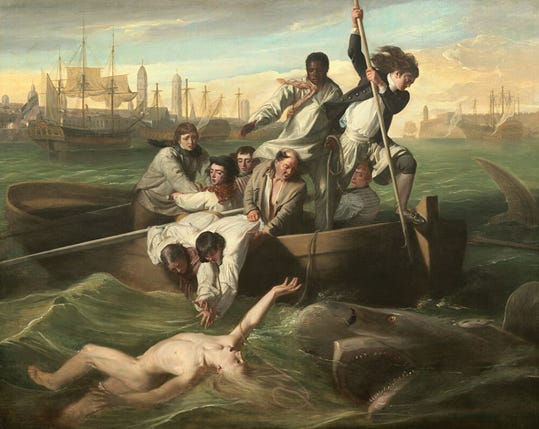
Figure 1. John Singleton Copley. Watson and the Shark (1778)
Orwell’s recognition that “when the white man turns tyrant, it is his own freedom that he destroys” (Orwell 1936, 4) is the pivotal insight of the colonial condition. Power here enslaves the powerful. The officer is compelled to suppress pity, to silence conscience, and to behave as if certainty were natural. The performance must never lapse; otherwise, the illusion of mastery would dissolve. What he calls civilization’s strength is in truth its most profound weakness—the need to act the tyrant to remain the ruler.
Joseph Conrad’s Heart of Darkness extends this performance into the wilderness of the self. Marlow’s journey up the Congo River becomes a descent into the moral abyss where the mask of civilization splits open. In Kurtz—the ivory trader who begins as an emissary of enlightenment and ends as a god of cruelty—Conrad portrays the total absorption of the actor into his role. Kurtz begins by performing power in the name of progress; he ends by worshipping power for its own sake. Surrounded by impaled heads, he has crossed the line between appearance and identity. The “horror” of his dying revelation is the horror of self-recognition—the discovery that domination has no moral limit once the mask becomes the face.
In both Orwell and Conrad, performance is the seed of moral deformation. The colonizer must project an image of control even when he feels none; to preserve that image, he suppresses doubt until doubt itself becomes impossible. Power creates the psychological conditions of its own corruption. What begins as a gesture of confidence becomes a mechanism of self-enslavement.
IV. Dependency — The Colonial Psyche
The second stage of domination—dependency—was most clearly analyzed by Frantz Fanon and Ashis Nandy, who described how colonial power is transformed into a psychic necessity. In Black Skin, White Masks (1952), Fanon depicts the colonial world as a “Manichean” order in which the colonizer constructs his identity through opposition to the colonized. The supposed superiority of the ruler exists only as a reflection of the ruled. “The colonizer,” Fanon writes, “needs the native to define himself” (Fanon 1952, 112). His sense of virtue, rationality, and destiny depends upon the continual degradation of the Other. Without subjugation, he would face the void of his own contingency.
In The Wretched of the Earth (1961), Fanon extends this idea into a theory of systemic violence. The colonizer must perpetually reenact domination to quiet the unease of his conscience. Violence becomes a ritual of reassurance—a means to silence the awareness of dependence. Each act of cruelty renews the myth of superiority, while each gesture of empathy threatens to dissolve it. The colonial order thus survives by compelling both parties to repeat its logic: the ruler must dominate to exist, and the ruled must endure to prove him real.
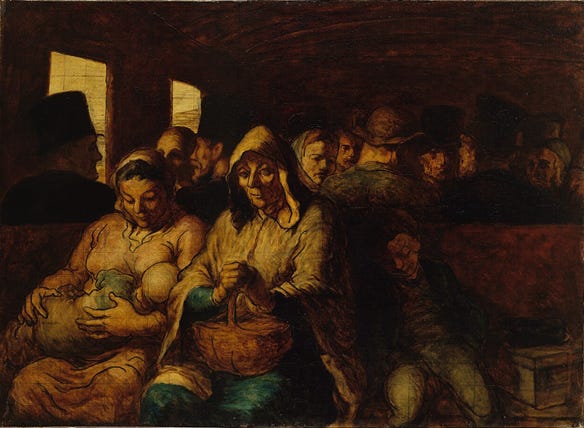
Figure 2. Honoré Daumier. The Third-Class Carriage (c. 1862–64)
Ashis Nandy’s The Intimate Enemy (1983) explores the same mechanism within the colonizer’s emotional life. British imperial culture, he argues, redefined manliness as hardness, rational control, and the suppression of tenderness. Compassion was recast as effeminacy; vulnerability as weakness. The administrator learned to repress the child and the feminine within himself, equating emotional restraint with moral virtue. The result was emotional mutilation. The British officer’s famed composure, his cultivated calm and stoic detachment, masked anxiety and inner emptiness. He required subordinates to mirror his authority because he could no longer recognize humanity within himself.
For both Fanon and Nandy, dependency is the hidden core of domination. The colonizer’s identity, stripped of reciprocity, becomes parasitic. He depends on the very people he claims to despise for the maintenance of his moral fictions. The performance of cruelty now functions as self-medication: each reenactment numbs the fear of collapse. The dominator’s mask is no longer an external disguise but a psychological necessity, a form of armour that has fused with the flesh beneath.
V. Disintegration — The Bureaucracy of Cruelty
When dependency hardens into habit, the result is disintegration—the erasure of conscience within systems that reward obedience over reflection. Aleksandr Solzhenitsyn’s The Gulag Archipelago (1973) chronicles this transformation within the Soviet world, revealing the psychological continuity between colonial and totalitarian forms of domination. The Soviet camp guard, like the colonial officer, acts within a structure that defines cruelty as duty. His moral blindness is not a personal failure, but rather an institutional design. “The line dividing good and evil,” Solzhenitsyn writes, “cuts through the heart of every human being” (Solzhenitsyn 1973, 168). In the gulag, that line is effaced by bureaucracy.
Solzhenitsyn describes officials who executed prisoners by day and read poetry by night, their lives partitioned into moral compartments maintained by fear and habit. The regime teaches them to suppress imagination—the capacity to perceive another’s suffering. Once empathy is extinguished, the mask of ideology replaces the moral face. The commissar, like the colonial officer, no longer experiences himself as an agent but as an instrument. He performs cruelty out of a conviction that history or policy demands it. Bureaucracy becomes the new stage of domination, and paperwork the new theatre of violence.
A similar disintegration appears in the American slave system, whose pathology was lived not in distant colonies but in domestic intimacy. The slave narratives of Frederick Douglass, Harriet Jacobs, Solomon Northup, and others expose the slow corrosion of conscience among masters and mistresses. Douglass recounts how Sophia Auld, once kind and compassionate, becomes cruel under the discipline of ownership: “the tender heart became stone, and the lamblike disposition gave way to one of tiger-like fierceness” (Douglass 1845, 40). Her transformation is not an anomaly but a pattern. To preserve authority, she must suppress empathy; to maintain moral comfort, she must internalize the logic of domination.
Northup’s Twelve Years a Slave portrays Edwin Epps as a man enslaved by his own rage. “He could not live without whipping,” Northup writes (Northup 1853, 180). Cruelty is his only means of self-affirmation. Harriet Jacobs, in Incidents in the Life of a Slave Girl, depicts Dr. Flint’s obsessive pursuit as the pathology of control: his desire and authority are indistinguishable, each feeding the other. These testimonies reveal the ultimate consequence of dependency: moral inversion, where the exercise of power becomes a compulsion and degradation is mistaken for order.
By the time power reaches this stage, conscience has been replaced by function. Whether in the camp, the colony, or the plantation, domination no longer requires conviction—it persists through habit. The human being becomes an extension of the system, incapable of moral reflection. What began as performance and dependency ends as the disintegration of self.
VI. The Continuum of Power
Across these cases, a single moral structure emerges. The colonial theatre of Orwell and Conrad, the psychological dependency described by Fanon and Nandy, the bureaucratic cruelty recorded by Solzhenitsyn, and the slaveholder’s corruption of conscience all form a continuum of power. The outward forms differ—empire, ideology, slavery—but the inner mechanics are identical. Domination requires performance; performance produces dependency; dependency ultimately leads to moral disintegration.
The apparent strength of the ruler conceals profound weakness. His authority depends on continuous reenactment; but his confidence masks anxiety. The colonizer’s mask is not merely symbolic but structural—it embodies the human cost of hierarchy itself. To maintain power, the dominator must destroy within himself the capacity for empathy that defines moral life. The result is a civilization that confuses discipline with virtue and blindness with order.
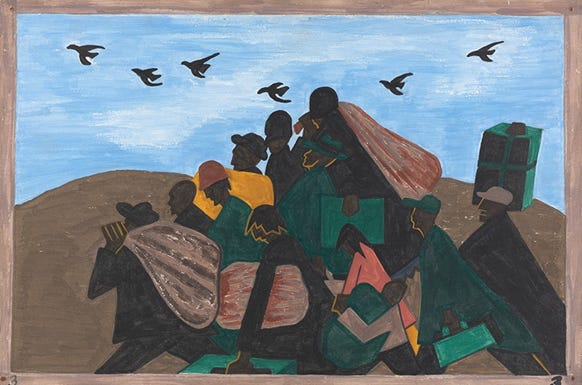
Figure 3. Jacob Lawrence. The Migration Series (1940–41)
Modern institutions reproduce this structure in refined forms. The colonial stage has become the administrative office; the whip has become the policy manual. Yet the moral logic is unchanged. Systems of surveillance, management, and algorithmic governance perpetuate the separation between action and awareness. The agents of these systems—clerks, officers, analysts—learn to obey procedures while silencing conscience. The mask is now a procedural design, intended not to intimidate but to anonymize. Power becomes impersonal, and therefore more secure.
The history of domination thus converges on a universal moral law: every system that depends on hierarchy demands the mutilation of empathy. To exercise power through subjugation is to participate in the gradual erosion of one’s own humanity.
VII. The Administrative Mask — Power in Modern Form
The twentieth and twenty-first centuries have perfected domination by removing its visible cruelty. The violence that once required spectacle now operates through abstraction. Bureaucracies, corporations, and digital infrastructures convert human consequences into data points. The cruelty is quieter but more comprehensive. No longer the lash or the bullet, but the spreadsheet and the algorithm, determine who is excluded, detained, or forgotten.
In these modern structures, the mask has become institutional. The bureaucrat who denies asylum, the analyst who authorizes a drone strike, the manager who enforces layoffs by numerical target—all act within systems that define obedience as virtue. Their moral comfort depends on procedural innocence: the belief that decisions are not personal but systemic. This diffusion of responsibility is the ultimate perfection of the mask. It eliminates the need for hypocrisy because the actor no longer perceives the performance as such.
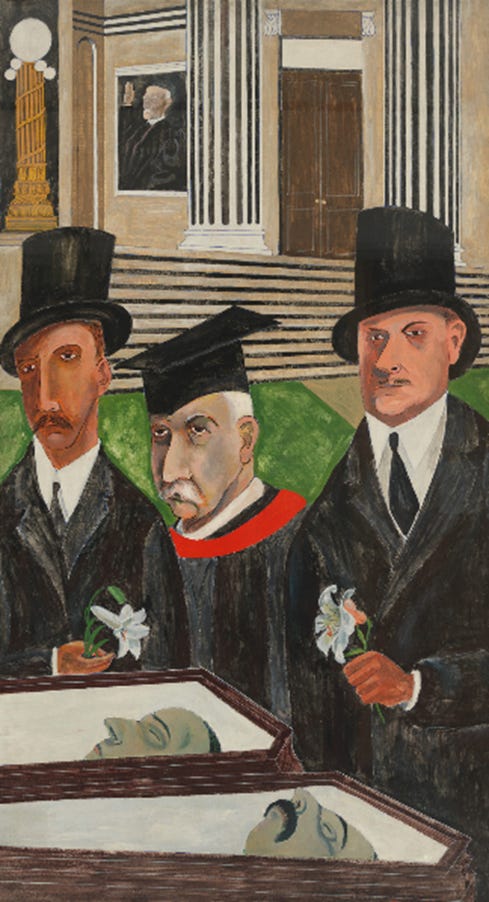
Figure 4. Ben Shahn. The Passion of Sacco and Vanzetti (1931–32)
Yet the psychological mechanism remains the same. The suppression of empathy is still the price of efficiency. To sustain the illusion of impartiality, the agent must detach themselves from the human consequences of their actions. The result is a society in which blindness is moralized as a professional attribute. The colonizer’s rifle has been replaced by the executive’s signature, but both enforce the same condition: the separation of conscience from action.
In this sense, Orwell’s warning transcends colonial history. The structures that once supported the empire now inhabit the routines of modern governance. The danger is no longer that individuals will commit spectacular atrocities, but that they will participate in ordinary systems that render atrocity invisible. The moral deformation of domination persists, now operating under the guise of progress.
VIII. The Ethics of Seeing
The history of domination reveals a single truth: the act of subjugation enslaves the one who subjugates. The colonial officer, the ideologue, the bureaucrat, and the master each exchange moral agency for a sense of belonging. They sacrifice freedom for the security of obedience, and conscience for the comfort of control. The mask that grants them authority also confines them. What begins as a gesture of superiority ends as the loss of self.
This pattern is not confined to any era or system; it is a recurring feature of human civilization. The drive for order and the fear of vulnerability compel societies to institutionalize blindness. The challenge, then, is not merely political but moral: to preserve the capacity to see. Because to see is to acknowledge suffering without disguise, to allow empathy to interrupt obedience, to remain capable of moral imagination in systems that reward its absence.
Orwell’s insight—“When the white man turns tyrant, it is his own freedom that he destroys” (Orwell 1936, 4)—is the final principle of this essay. Domination destroys both sides of the relation; it annihilates the victim’s liberty and the oppressor’s humanity. The mask that power requires eventually becomes irreversible. Every civilization that grounds its order on subjugation carries within it the seeds of its moral ruin.
To resist this ruin is to reclaim vision. The task of ethical life is to remove the mask—to restore the face to power, conscience to command, and empathy to judgement. The human face, exposed and fallible, is the opposite of empire, and the beginning of moral freedom.
Works Cited
Douglass, Frederick. Narrative of the Life of Frederick Douglass, an American Slave. Boston, 1845.
Fanon, Frantz. Black Skin, White Masks. Grove Press, 1952.
———. The Wretched of the Earth. Grove Press, 1961.
Jacobs, Harriet A. Incidents in the Life of a Slave Girl. Boston, 1861.
Nandy, Ashis. The Intimate Enemy: Loss and Recovery of Self Under Colonialism. Oxford University Press, 1983.
Northup, Solomon. Twelve Years a Slave. Auburn, NY, 1853.
Orwell, George. “Shooting an Elephant.” New Writing, no. 2, Autumn 1936, pp. 1–7.
Solzhenitsyn, Aleksandr. The Gulag Archipelago, 1918–1956. Harper & Row, 1973.
Image Credits
Figure 1. John Singleton Copley. Watson and the Shark. 1778. National Gallery of Art, Washington, D.C. Source.
Figure 2. Honoré Daumier. The Third-Class Carriage. c. 1862–64. The Metropolitan Museum of Art, New York. Source.
Figure 3. Jacob Lawrence. The Migration Series. 1940–41. The Phillips Collection, Washington, D.C., and The Museum of Modern Art, New York. Source.
Figure 4. Ben Shahn. The Passion of Sacco and Vanzetti. 1931–32. Whitney Museum of American Art, New York. Source.