
Vanished Worlds
Collapse, Disappearance, and a Moral Ecology of Civilizations

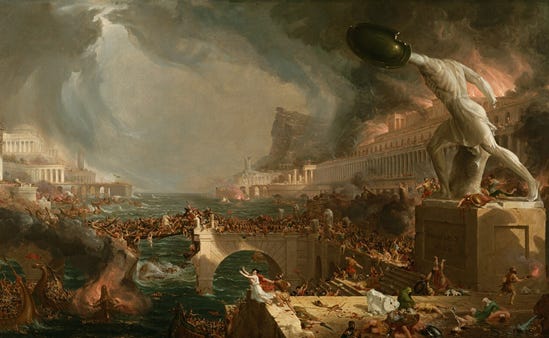
Figure 1. Thomas Cole, The Course of Empire: Destruction (1836)
Introduction
Civilization is often imagined in triumphal terms: the cumulative ascent of human ingenuity, complexity, and moral refinement. Yet the archaeological and historical record offers a sobering counterpoint. The earth is strewn with the remnants of civilizations that once flourished—urban cultures with intricate bureaucracies, symbolic orders, and ecological mastery—yet vanished so completely that only ruins, fragmentary scripts, or faint literary echoes remain. Their disappearance unsettles the comforting belief that complexity guarantees endurance or that cultural achievement secures permanence.
This essay examines several well-documented cases of civilizational collapse or disappearance. The aim is not antiquarian curiosity, but diagnostic understanding. Collapse is a revelatory moment: when a social order fails, the underlying forces that once held it together—ecological constraints, institutional logics, ideological commitments, and moral frameworks—come into sharper view. These vanished worlds serve as mirrors, showing that civilizational life is delicate, contingent, and morally constrained, and that the conditions sustaining collective flourishing can deteriorate far more quickly than their grandeur suggests.
The essay approaches collapse as a moral ecology. Civilizations are not merely political groupings or technological assemblages; they are normative worlds that must sustain the material foundations of life, legitimate authority, and cultivate the imaginative capacities through which societies adapt to crisis. Collapse occurs when these domains fall out of equilibrium—when ecological pressures overwhelm institutions, when elites abandon restraint, when legitimacy erodes, or when symbolic orders can no longer justify the transformations required for survival.
The following case studies, spanning millennia and continents, illuminate the forces that stress and ultimately unmake the worlds people build. By asking how and why past civilizations disappeared, we gain insight into the contradictions inherent in all large-scale social orders—and into the moral and ecological balances contemporary civilization must negotiate if it is to avoid joining the catalogue of vanished worlds.
I. Civilizations as Moral Ecologies
Modern scholarship often treats civilization as a complex adaptive system—an interlocking web of ecological flows, political institutions, symbolic narratives, and social hierarchies (Tainter 1988, 37–39; Scott 2017, 112). This “systems” view highlights how infrastructures, administrative networks, and population movements can stabilize or destabilize societies. Yet for understanding collapse, it helps to recover an older intuition: civilizations are moral ecologies. They are not just aggregations of technologies and institutions, but normative environments in which ideas of obligation, legitimacy, hierarchy, and purpose structure how people cooperate, obey, and imagine their place in the world.
A moral ecology names the deep architecture of a civilization’s self-understanding. It includes the cosmologies that justify rule, the rituals that naturalize hierarchy, the narratives that shape collective aspiration, and the tacit expectations that bind rulers and ruled into a shared—if unequal—social order. These normative foundations determine how societies respond to stress: whether elites moderate extraction or intensify it, whether institutions innovate or retreat into orthodoxy, and whether populations endure hardship or defect from the social compact.
Civilizations collapse when their moral ecology is overstrained. Ecological degradation, elite overproduction, or abrupt climatic shocks may initiate decline. But collapse requires the failure of the institutions and moral frameworks that once mediated these pressures. Slow-moving stressors—such as soil exhaustion, demographic strain, and inequality—accumulate until they erode the credibility of leaders and the viability of collective life. At that point, even comparatively small shocks can tip the system into cascading failure. Collapse is thus not merely a material event; it is a moral and institutional unravelling in which the justification for social order disintegrates alongside the order itself.
The cases surveyed here are not unified by geography or cultural lineage. What unifies them is the structural pattern. Each shows how the complex achievements of civilization—bureaucracy, hierarchy, long-distance exchange, centralized authority—generate new vulnerabilities. These very achievements become liabilities when environmental thresholds are crossed or when normative orders are unable to adapt. Collapse is not an anomaly in the history of civilization; it is a recurring resolution of civilizational contradiction, the moment when complexity exceeds the moral and ecological capacities required to sustain it.
II. The Late Bronze Age Collapse (c. 1200 BCE)
The Late Bronze Age world of the eastern Mediterranean was, by ancient standards, a deeply interconnected macro-civilization. The Hittites, Egyptians, Mycenaeans, Cypriots, and Levantine city-states were tied together by dense webs of trade, diplomatic correspondence, and shared technologies of palace administration (Cline 2014, 12–18). Tin from distant regions flowed into Anatolia and the Aegean; Egyptian grain sustained cities abroad; royal families intermarried to secure alliances. Administrative tablets reveal an elite world in which rulers treated one another as peers within a cosmopolitan political economy—one of humanity’s earliest experiments in systemic interdependence.
Around 1200 BCE, this order unravelled with startling speed. Mycenaean fortresses were destroyed, Hittite cities burned, Ugarit fell, and Egypt faced near-crippling assaults. The causes were multiple: prolonged droughts, regional cooling, internal revolts, incursions by mobile groups, and the collapse of trade routes vital to palace economies (Kaniewski et al. 2013, 73–75). Individually, none of these pressures need have been fatal. Together, in an integrated system without redundancy or strong local autonomy, they proved overwhelming.
The deeper lesson is structural. A system optimized for stability and interregional surplus became vulnerable to cascading failure. When one polity collapsed, others were abruptly deprived of metals, grain, or military aid, triggering secondary crises. Palace economies, built on rigid hierarchies and narrow channels of redistribution, lacked the flexibility to reorganize in response. As drought deepened, elites intensified extraction rather than reforming institutions, accelerating dissent and population flight.
The moral ecology of the Bronze Age—hierarchical, extractive, administratively rigid—left little room for improvisation under stress. Its legitimating narratives presumed stability; its institutions depended on continuous flows of tribute and goods. When those flows faltered, what had once been civilizational strengths—interdependence, administrative sophistication, elite coordination—became vulnerabilities. The Late Bronze Age collapse stands as an early lesson in the risks of complexity without resilience: a warning, preserved in ruins and broken archives, of how quickly a flourishing world can dissolve when its moral and ecological foundations fail together.
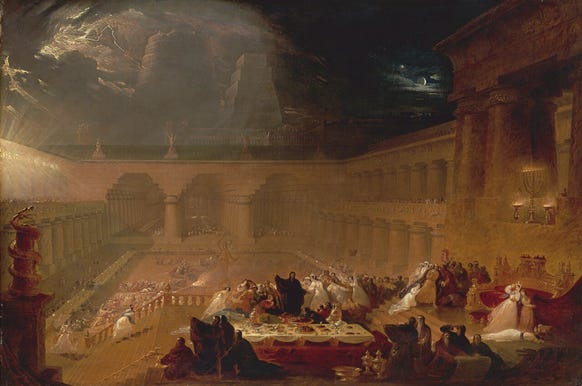
Figure 2. John Martin, Belshazzar’s Feast (1821)
III. The Indus Valley Civilization (c. 2600–1900 BCE)
Few civilizations have vanished as completely or as quietly as the Indus Valley Civilization. Urban centres such as Mohenjo-Daro and Harappa displayed sophisticated planning, aligned street grids, advanced drainage systems, standardized weights, long-distance trade networks, and a script not yet fully deciphered (Wright 2010, 112–119). These features indicate a robust civic order and a high degree of social coordination. Yet after 1900 BCE, the urban world dispersed, and the civilization’s distinctive material culture faded without the violent destruction or invasions seen elsewhere.
The prevailing explanation centres on environmental transformation. Palaeoclimatic evidence indicates shifts in the monsoon system—weakening and geographic retractions—and the drying or redirection of the Ghaggar-Hakra river, a major artery for agricultural production (Giosan et al. 2012, 1–3). These changes undermined the ecological rhythms on which Indus cities depended. A civilization organized around seasonal regularity and predictable water flows suddenly faced hydrological instability. Large urban concentrations became increasingly difficult to sustain.
Institutionally, the Indus political order appears to have emphasized local autonomy, standardized administration, and materially modest governance rather than monumental state power. Its cities lacked the towering palaces and grand temples of Mesopotamia or Egypt. This suggests a decentralized, perhaps council- or guild-based political ecology—one that may have lacked the capacity for rapid, empire-scale response when environmental pressures mounted. What made the Indus world distinctive in stable conditions—its restraint, uniformity, and decentralization—may have hindered adaptation in periods of crisis.
The striking absence of monuments celebrating kings, conquests, or imperial lineages points to a civilizational ethos oriented toward civic order rather than dynastic grandeur. Yet this modesty of self-presentation also shaped its historical afterlife. Without royal inscriptions or durable propaganda, the civilization faded from collective memory. So collapse here was not cataclysmic but dissolutive: de-urbanization and reorganization into smaller agrarian communities that persisted but no longer generated the cultural forms that had defined the Indus world.
A moral ecology built around environmental stability and civic discipline faltered when those rhythms changed. The Indus case shows that collapse need not be spectacular to be profound. Civilizations can dissolve through quiet attenuation rather than dramatic ruin—especially when institutions are not designed for innovation and symbolic orders do not legitimate reconfiguration in response to environmental disruption.
IV. The Classic Maya Collapse (c. 750–900 CE)
The Classic Maya collapse is one of the most intensively studied episodes of civilizational decline. For centuries, Maya city-states flourished across the southern lowlands, constructing vast ceremonial complexes, developing intricate calendars, and sustaining a cosmology that linked divine kingship to agricultural fertility and cosmic balance. Monumental inscriptions proclaimed dynastic legitimacy and framed political life within a sacred temporal order. Yet between 750 and 900 CE, many of these urban centres were abandoned, their monuments toppled or left unfinished.
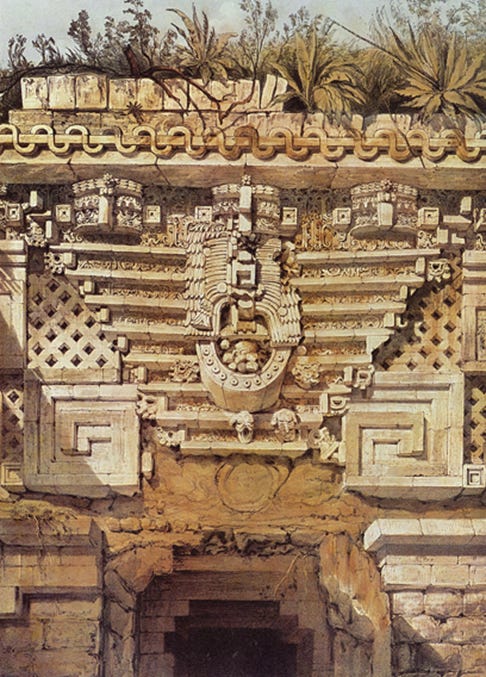
Figure 3. Frederick Catherwood, The Ruins of Uxmal (1844)
The causes of this decline were multifactorial. Palaeoenvironmental data indicates cycles of severe drought during the period of political unravelling. Combined with deforestation, soil depletion from intensive agriculture, and mounting population pressures, these climatic stresses undermined the subsistence base that supported Maya elites (Demarest 2004, 231–234). Water reservoirs dried, fields lost productivity, and the delicate balance between labour, tribute, and ecological yield became precarious.
Elite competition intensified just as resources shrank. Rival kings engaged in elaborate ritual warfare, erected stelae to commemorate their victories, and expanded their palatial complexes to affirm their divine status. These symbolic expenditures consumed labour and resources that were increasingly scarce. Political leaders doubled down on the ritual and monumental strategies that had underwritten legitimacy in times of abundance, even as those strategies exacerbated ecological strain. The moral ecology of divine kingship—a system linking cosmic order to the person of the ruler—offered little conceptual room for institutional reinvention.
The Maya case reveals a recurring pattern: when ecological strain converges with elite overproduction, collapse accelerates. Ritual authority became brittle precisely when innovation was most needed. When kings could no longer guarantee rainfall or fertility—roles central to their cosmic function—their legitimacy dissolved. Populations emigrated, cities depopulated, and political centres fragmented. Yet collapse was not uniform. While the southern lowlands emptied, northern centres such as Chichén Itzá persisted or expanded, underscoring that collapse is rarely total; it reorganizes as it destroys.
A moral ecology grounded in divine kingship, ritual warfare, and intensive agriculture lacked the flexibility to survive a prolonged ecological crisis. The Classic Maya collapse shows how deeply a civilization’s fabric can be shaped by its core symbolic commitments. When those commitments become maladaptive, even highly sophisticated societies can unravel with startling speed.
V. Akkad and the Sumerian States
In Mesopotamia, the Akkadian Empire (c. 2334–2154 BCE) forged the first large territorial state by unifying Sumerian cities under centralized rule. This political formation extended well beyond earlier city-state mosaics, drawing vast regions into a single system of tribute, labour mobilization, and ideological control. Administrative innovations like standardized taxation, imperial messaging, and military conscription bound disparate communities into an unprecedented architecture of power.
Yet this consolidation rested on fragile ecological foundations. Around 2200 BCE, a severe aridification event known as the “4.2 kiloyear drought” disrupted rainfall across the region, reducing agricultural yields that supported both urban populations and imperial extraction (Weiss 2017, 3–5). Declining precipitation affected dry-farming zones and irrigated fields alike, where reduced river flows and higher evaporation weakened production. Centuries of irrigation had already salinized soils, further lowering yields and eroding subsistence margins.
Imperial overreach magnified these pressures. The Akkadian state demanded grain, corvée labour, and military service on a scale suited to ecological stability. When yields plummeted, these demands became intolerable. Rather than recalibrating extraction to environmental limits, imperial administrators intensified requisitions to maintain court, army, and bureaucracy. Local communities bore the brunt; famine, migration, and rebellion followed.
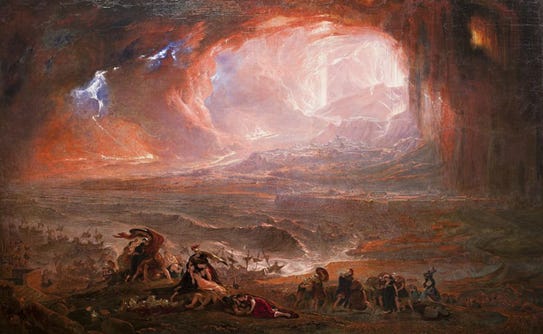
Figure 4. John Martin, The Destruction of Pompeii and Herculaneum (1822)
The Curse of Akkad, a later literary text, mythologizes the collapse as divine punishment for imperial hubris (Foster 2005, 103–104). Poetic as it is, the text reflects a deeper insight into civilizational dynamics: when institutions cling to established patterns of domination despite environmental upheaval, ecological stress becomes a moral and political crisis. The failure lies not only in the climate shock but in the inability or unwillingness of rulers to adapt the moral ecology of governance to new realities.
Akkad’s fall initiated centuries of fragmentation. Sumerian cities reasserted autonomy, and later dynasties experimented with alternative forms of authority and resource management. As elsewhere, collapse produced a landscape of smaller successor regimes better matched to ecological and administrative possibilities. The Akkadian episode illustrates how imperial scale, when unmoored from environmental constraints and moral adaptability, generates the conditions for its own disintegration.
VI. The Western Roman Empire
Rome’s “fall” was not a sudden catastrophe but a long degeneration of state capacity, legitimacy, and social cohesion between the third and fifth centuries CE. Environmental pressures played a significant role: climatic cooling shortened growing seasons, harvests declined, and epidemics periodically reduced the population and labour supply (Harper 2017, 45–48). These stresses degraded the fiscal foundations of the empire, forcing heavier taxation on shrinking agrarian communities.
But the most consequential forces were internal. As imperial authority weakened, elite competition intensified. Powerful families increasingly treated offices as private property, appropriating tax revenues and military resources to entrench their influence. The administrative skeleton of the empire became scaffolding for elite capture. The civic ideals of res publica—the shared public thing—persisted rhetorically but eroded in practice as elites prioritized local advantage over imperial coherence (Heather 2005, 212–215).
The Roman state’s institutions, once capable of integrating diverse regions and classes, became brittle and predatory. Taxation became arbitrary; legal protections were uneven; military recruitment was unreliable. Ordinary people turned instead to bishops, landlords, and barbarian federates who offered more immediate protection and justice. The empire hollowed out from within, as populations shifted loyalty to authorities that, though less formally legitimate, were more responsive.

Figure 5. Caspar David Friedrich, The Abbey in the Oakwood (1809–10)
Rome’s collapse exemplifies a key mechanism of civilizational decline: the internal withdrawal of cooperation. A state does not fall merely when it loses battles, but when its moral ecology—its ability to secure consent, distribute justice, and mediate competing interests—ceases to function. Long before the deposition of the last Western emperor in 476, Rome had lost its grip on the normative commitments that once bound citizens to a common order.
For Rome, collapse meant transformation into a constellation of successor kingdoms. But the civilizational form itself—the public ethos, institutional coherence, and shared legal culture that defined Roman life—disintegrated. The Western Empire’s fate shows how collapse can be both gradual and profound: a political metamorphosis in which the shell of legitimacy briefly survives even as the moral and institutional substance dissolves beneath it.
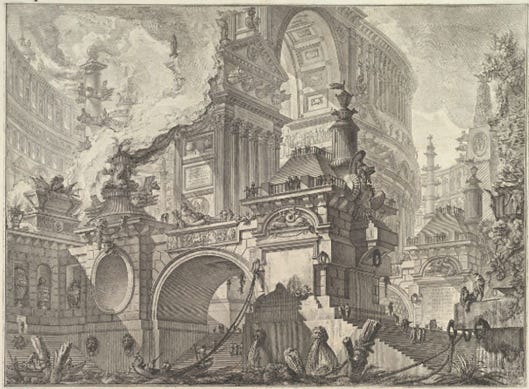
Figure 6. Giovanni Battista Piranesi, Vedute di Roma (1740s–60s)
VII. Cahokia and the Mississippian Decline (c. 1200–1400 CE)
Cahokia, near present-day St. Louis, was the largest urban centre north of Mesoamerica—a monumental expression of Mississippian culture and political ambition. At its height, it comprised dozens of massive earthen mounds, ritual plazas, ceremonial complexes, and dense residential districts arranged according to cosmological principles. Its scale and integration suggest a hierarchical society capable of mobilizing thousands of workers and coordinating regional exchange networks (Pauketat 2009, 81–90). Yet by 1400, the city had been abandoned, its population dispersed, and its political coherence dissolved.
Cahokia’s decline likely arose from intertwined ecological and social pressures. Archaeological and palaeoenvironmental evidence suggests that deforestation and soil depletion resulted from intensive agriculture and mound construction, as well as overhunting of local game, and shifting flooding patterns along the Mississippi and Illinois rivers, which periodically inundated farmland. These stresses unfolded within the broader context of climatic instability associated with the Medieval Climate Anomaly and the onset of the Little Ice Age (Pauketat 2009, 161–164). Volatile conditions led to erratic yields, undermining the subsistence base of the urban population.
Ecological pressures alone, however, do not fully explain the city’s decline. Cahokia appears to have experienced mounting internal tensions as elites expanded ritual and political authority. Large ceremonial events and displays of power required heavy labour and resource extraction. As environmental constraints tightened, the ability of Cahokian elites to sustain the ritual calendar, manage redistribution, and mediate conflict diminished. A system that had thrived on centralization, hierarchy, and ceremonial integration could not easily adjust to shifting ecological realities.
As in many cases examined here, collapse took the form not of annihilation but dispersal. Cahokia’s population did not vanish; people reorganized into smaller, less hierarchical communities across the Mississippi Valley and southeastern woodlands. Successor polities reconfigured subsistence, ritual, and authority in ways better suited to local conditions. The Mississippian world persisted, but its most ambitious urban centre did not.
Cahokia’s disappearance underscores a broader theme: civilizations embedded in fragile ecological niches are especially vulnerable to climatic volatility. The tighter the link between political authority and ritual performances dependent on environmental stability, the more destabilizing even modest climatic fluctuations become for legitimacy and social cohesion. Cahokia’s collapse shows how a society’s symbolic order and material regime must remain in equilibrium with its landscape. When that equilibrium fails, even monumental civilizations can dissolve into obscurity.
VIII. The Recurring Grammar of Collapse
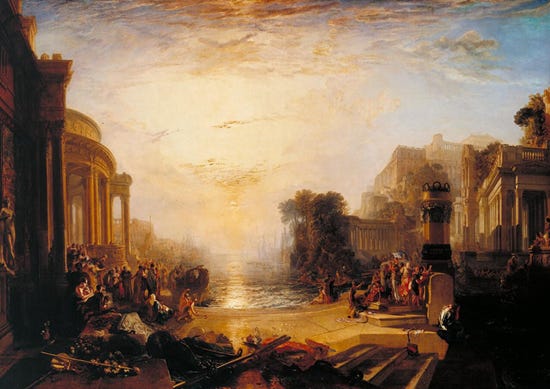
Figure 7. J.M.W. Turner, The Decline of the Carthaginian Empire (1817)
Across these varied cases—Bronze Age states, the Indus Valley, the Maya, Akkad, Rome, and Cahokia—several patterns recur. Together, they form a grammar of collapse: a set of regularities in how civilizations overstretch their capacities, lose their bearings, and reorganize or disappear.
1. Ecological Overreach
Civilizations frequently expand beyond the regenerative limits of their environments. Soil exhaustion, deforestation, water-system degradation, and climatic shifts create slow-moving vulnerabilities that later become catastrophic. These pressures appear in every case: salinized Mesopotamian fields, Maya deforestation, Indus monsoon shifts, Cahokian floodplain instability, and the climatic cooling that stressed Rome’s agrarian economy. Ecological overreach rarely acts alone, but it consistently sets the stage.
2. Elite Overproduction and Political Fragmentation
As Peter Turchin argues, when the number of elite aspirants grows faster than the number of available positions, internal competition intensifies, and cohesion erodes (Turchin 2016, 142–144). This dynamic is visible in Maya ritual warfare, in Roman aristocratic capture of public offices, and in Late Bronze Age palace rivalries. Elite competition tends to peak just as resources tighten, accelerating breakdown rather than encouraging adaptation.
3. Loss of Legitimacy and Moral Exhaustion
Civilizations collapse not only when they fail materially but when they fail normatively. When institutions can no longer provide subsistence, justice, or predictability, populations withdraw their loyalty or migrate. This is evident in the dissolution of Indus urbanism, the fragmentation of Akkadian authority, and the Roman turn to alternative centres of protection and meaning. Collapse begins when a civilization’s moral ecology—its shared expectations about power, obligation, and purpose—can no longer hold people in a workable social order.
4. Systemic Interdependence and Cascading Failure
Highly interconnected civilizations are vulnerable to shock transmission. Interdependence creates efficiencies in stable periods but amplifies fragility in times of stress. The Late Bronze Age collapse shows how the downfall of one polity can ripple through an entire regional system, destabilizing trade, diplomacy, and security. Complexity without resilience becomes a conduit through which crises multiply.
5. Failure of Imagination
Perhaps the most important pattern is the failure of imagination. Civilizations collapse when their symbolic orders cannot conceptualize or legitimate the adaptations required for survival. Ritual kingship, imperial ideology, bureaucratic orthodoxy—all can become conceptual prisons. When the Maya kingship system could no longer guarantee fertility, when Akkadian administrators refused to recalibrate extraction, when Roman elites clung to private enrichment despite public ruin, collapse followed.
A civilization’s downfall reveals not only material limitations but imaginative ones: the inability to envision new forms of legitimacy, coordination, and meaning.
IX. Why Some Civilizations Disappear Entirely
Not all collapsed civilizations vanish equally. Some—such as the Indus Valley Civilization or Cahokia—leave only faint material traces and little cultural memory. Others—like Rome or Egypt—cast long shadows across millennia. This asymmetry is not merely a matter of scale or longevity. It emerges from a deeper interplay between material durability, symbolic ambition, and the moral ecologies that frame what a society considers worth preserving.
1. Archival Fragility and the Fate of Memory
Many civilizations rely on writing systems or media that prove fragile over time. The Indus script, inscribed on small seals and lacking monumental inscriptions, vanished with the institutions that sustained it. When a writing system disappears, much of the civilizational memory—administrative, ritual, political—is irretrievably lost. Without textual scaffolding, even sophisticated societies can be rendered mute to posterity.
By contrast, civilizations such as Egypt or Rome built textual ecosystems—archives, annals, monumental inscriptions—that preserved their voices. These records anchored their afterlives, enabling successors to reinterpret, imitate, or appropriate their pasts.
2. Monumentality and Durable Symbolic Architecture
Material endurance also shapes memory. Stone temples, pyramids, and fortifications often outlive the societies that built them, leaving a durable residue that signals to later peoples that a civilization once stood there. Cahokia’s earthen mounds, monumental in their time, were more vulnerable to erosion and environmental change. Without stone architecture, its urban scale is visible today mainly through archaeological reconstruction.
Civilizational disappearance is thus not only a matter of decline but of material representation: how a civilization chooses to embody power, legitimacy, and cosmology in forms capable of resisting time.
3. Assimilation and Cultural Absorption
Some civilizations disappear because their populations are absorbed into successor societies. The Indus world reorganized into smaller rural communities whose practices blended into wider regional cultures. Mississippian peoples continued to live and adapt after Cahokia’s decline, but in smaller-scale polities that left fewer urban remains. Assimilation dissolves the coherence of a civilization not by destruction but by integration, folding distinctive patterns into broader cultural tapestries.
4. Ecological Dissolution of Urban Sites
Environmental processes—sedimentation, flooding, vegetative overgrowth—can erase or obscure urban landscapes. Shifting rivers in the Indus basin buried settlement systems beneath layers of silt. Cahokia’s location in dynamic floodplains rendered its ruins vulnerable to riverine change. Civilizations tightly tied to unstable ecological niches may be forgotten simply because their physical imprints fail to endure.
5. Symbolic Economy and the Will to Memorialize
A more subtle factor is symbolic ambition. Some civilizations devote substantial resources to recording and monumentalizing their existence. Others cultivate an ethos of modesty or civic pragmatism that does not prioritize durable memorialization. The Indus world, with its absence of king lists, epic narratives, or monumental propaganda, appears to have invested more in standardized governance than in self-display.
In this sense, disappearance reflects a moral choice, intentional or not: a civilization’s symbolic economy—what it values, commemorates, and materializes—helps determine how long its memory survives. Civilizations that do not monumentalize power often vanish more completely, even when they may have been more sustainable or humane than their monumentalizing peers.
X. Collapse and the Contemporary World
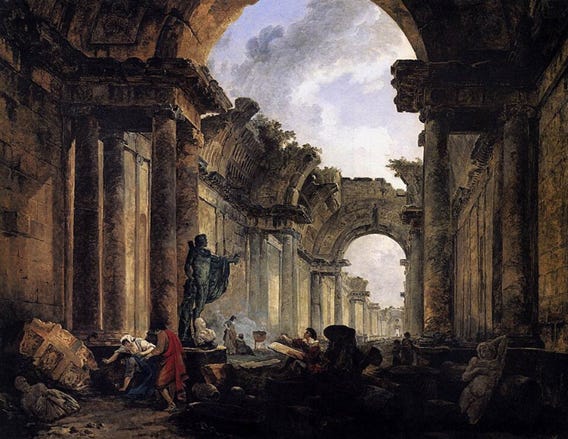
Figure 8. Hubert Robert, Imaginary View of the Grande Galerie of the Louvre in Ruins (1796)
The forces that strained ancient civilizations—ecological stress, elite overproduction, institutional brittleness, and failures of imagination—are visible today at planetary scale. To explore civilizational collapse is therefore not to rehearse distant tragedies, but to examine the fragilities of our own world through the lens of historical time.
1. Ecological Limits in a Global System
Modern industrial civilization rests on unprecedented levels of energy use, extraction, and environmental transformation. Unlike earlier civilizations, bounded by regional ecologies, the contemporary global system is drawing down the carrying capacity of the planet as a whole. Deforestation, soil depletion, biodiversity loss, and climate change echo ancient patterns of overshoot but on a scale that encompasses all societies simultaneously.
Earlier civilizations could migrate, reorganize, or disperse. Our global interdependence—economic, technological, ecological—leaves fewer pathways for local resilience. The failure of one region’s ecological system now transmits rapidly through markets, supply chains, and climatic feedback.
2. Institutional Overstretch and Governance Fatigue
Just as imperial structures once expanded beyond what their administrative capacities could sustain, contemporary governance institutions—national, transnational, and corporate—face widening gaps between their mandates and capabilities. Problems such as climate mitigation, technological regulation, and economic inequality demand long-term coordination and imagination, yet many political systems struggle to deliver even short-term consensus. The pattern echoes Rome’s institutional fatigue: formal structures persist while functional legitimacy erodes.
3. Elite Overproduction and Social Fragmentation
Turchin’s mechanism of elite overproduction is increasingly visible in many advanced societies. Growing numbers of highly credentialed individuals compete for limited positions of influence, generating political polarization, social distrust, and cycles of institutional dysfunction. As in the Maya collapse, elite competition often intensifies precisely as ecological and economic pressures mount, compounding the difficulty of collective response.
4. Moral Exhaustion and Disintegrating Consensus
When political institutions fail to provide meaning, protection, fairness, or predictability, moral exhaustion follows. Citizens turn to alternative sources of identity and authority—religious movements, local solidarities, populist leaders, or withdrawal. This erosion of shared norms mirrors patterns seen in Rome’s late imperial centuries: populations retreat from centralized institutions that no longer express their aspirations or protect their interests.
5. Failure of Imagination and the Civilizational Horizon
The greatest modern threat may be a failure of imagination: the inability to envision ways of living that remain within ecological limits while sustaining meaningful social life. Ancient civilizations often collapsed not because solutions were technically unavailable, but because their symbolic orders rendered those solutions unthinkable. Ritual kingship, imperial ideology, and bureaucratic rigidity blinded societies to viable paths of adaptation.
Our own symbolic order—rooted in growth, extraction, and perpetual acceleration—may similarly narrow the field of imaginable futures. Civilization’s refinements and cruelties grow from the same soil, and its imaginative horizons shape both its greatest achievements and its most dangerous blind spots.
Conclusion

Figure 9. Thomas Cole, The Course of Empire: Desolation (1836)
When civilizations vanish, they leave warnings. Each lost world—Bronze Age palace, Maya city, Indus metropolis, Roman province, Mississippian mound centre—testifies to the delicacy of human achievement and the narrow margin within which complex societies endure. Collapse is not merely an end-state. It is a moment of revelation, when hidden dependencies, moral compromises, and structural limits become visible in stark relief. What seemed stable is shown to rest on fragile ecological rhythms; what seemed legitimate is revealed to require continuous moral investment; what seemed permanent was, in fact, provisional.
To study vanished civilizations is not to indulge fatalism or nostalgia, but to confront a deeper historical truth: human societies have always walked the edge between flourishing and fragility. Every civilization balances the demands of ecology, hierarchy, imagination, and justice; every civilization eventually encounters limits it struggles to negotiate. What distinguishes our era is not immunity from collapse but the scale at which collapse could occur. Our planetary interdependence binds societies into a single ecological and economic system. In such a world, the failure of one region’s moral and ecological balance does not remain local; it diffuses outward through markets, migration, political destabilisation, and climatic feedback.
The responsibility of the present, then, is not to presume our exceptionalism, but to learn from the vanished worlds before us. Their histories reveal that the black flower of civilization—the bloom of complexity, refinement, and power—grows from the same soil that nourishes decline. The capacities that enable civilization’s ascent also generate its vulnerabilities. Resilience, therefore, requires more than technical ingenuity. It demands moral imagination, the capacity to envision forms of life not dictated by inherited patterns of extraction and domination; institutional humility, the willingness to reform or relinquish structures that no longer serve collective flourishing; and ecological realism, an honest reckoning with limits that no symbolic order can long ignore.
Civilizations collapse when they cannot imagine how to live differently. The task before us is to keep that imagination alive: to remember what earlier societies could not see in time, and to act before our own moral ecology slips beyond repair.
Works Cited
Cline, Eric H. 1177 B.C.: The Year Civilization Collapsed. Princeton University Press, 2014.
Demarest, Arthur. Ancient Maya: The Rise and Fall of a Rainforest Civilization. Cambridge University Press, 2004.
Foster, Benjamin R., editor. Before the Muses: An Anthology of Akkadian Literature. 3rd ed., CDL Press, 2005.
Giosan, Liviu, et al. “Fluvial Landscapes of the Harappan Civilization.” Proceedings of the National Academy of Sciences, vol. 109, no. 26, 2012, pp. E1688–E1694.
Harper, Kyle. The Fate of Rome: Climate, Disease, and the End of an Empire. Princeton University Press, 2017.
Heather, Peter. The Fall of the Roman Empire: A New History of Rome and the Barbarians. Oxford University Press, 2005.
Kaniewski, David, et al. “Environmental Roots of the Late Bronze Age Crisis.” PLoS ONE, vol. 8, no. 8, 2013, pp. 1–10.
Pauketat, Timothy R. Cahokia: Ancient America’s Great City on the Mississippi. Viking, 2009.
Scott, James C. Against the Grain: A Deep History of the Earliest States. Yale University Press, 2017.
Tainter, Joseph A. The Collapse of Complex Societies. Cambridge University Press, 1988.
Turchin, Peter. Ages of Discord: A Structural-Demographic Analysis of American History. Beresta Books, 2016.
Weiss, Harvey, editor. Megadrought and Collapse: From Early Agriculture to Angkor. Oxford University Press, 2017.
Wright, Rita P. The Ancient Indus: Urbanism, Economy, and Society. Cambridge University Press, 2010.
Image Credits
Figure 1. Thomas Cole, The Course of Empire: Destruction (1836). New-York Historical Society Museum & Library, New York. Source.
#/media/File:Cole_Thomas_The_Course_of_Empire_Destruction_1836.jpg)
Figure 2. John Martin, Belshazzar’s Feast (1821). Yale Centre for British Art. Source.
Figure 3 Frederick Catherwood, The Ruins of Uxmal (1844), from Views of Ancient Monuments in Central America, Chiapas and Yucatan. British Museum, London. Source.
Figure 4. John Martin, The Destruction of Pompeii and Herculaneum (1822). Tate, London. Source.

Figure 5. Caspar David Friedrich, The Abbey in the Oakwood (1809–10). Alte Nationalgalerie (Nationalgalerie, Staatliche Museen zu Berlin). Source.
Figure 6. Giovanni Battista Piranesi, Vedute di Roma (Roman Forum plate; 1740s–60s). Metropolitan Museum of Art, New York. Source.
Figure 7. J.M.W. Turner, The Decline of the Carthaginian Empire (1817). Tate, London. Source.
Figure 8. Hubert Robert, Imaginary View of the Grande Galerie of the Louvre in Ruins (1796). Musée du Louvre, Paris. Source.

Figure 9. Thomas Cole, The Course of Empire: Desolation (1836). New-York Historical Society Museum & Library, New York. Source.